The Vault Dossier · No. 2 · November 2026
The Rules: how a three-day script called Scary Movie saved the slasher and kept Ghostface alive for 30 years
A house-sitting writer, a director who said no twice, a star who asked to die in the first scene and a $6.4 million opening that kept growing. Scream turns 30 on December 20. The full story, sourced.
By the Horror Planet editors · about 11 minutes · Scream (1996) film page
The call
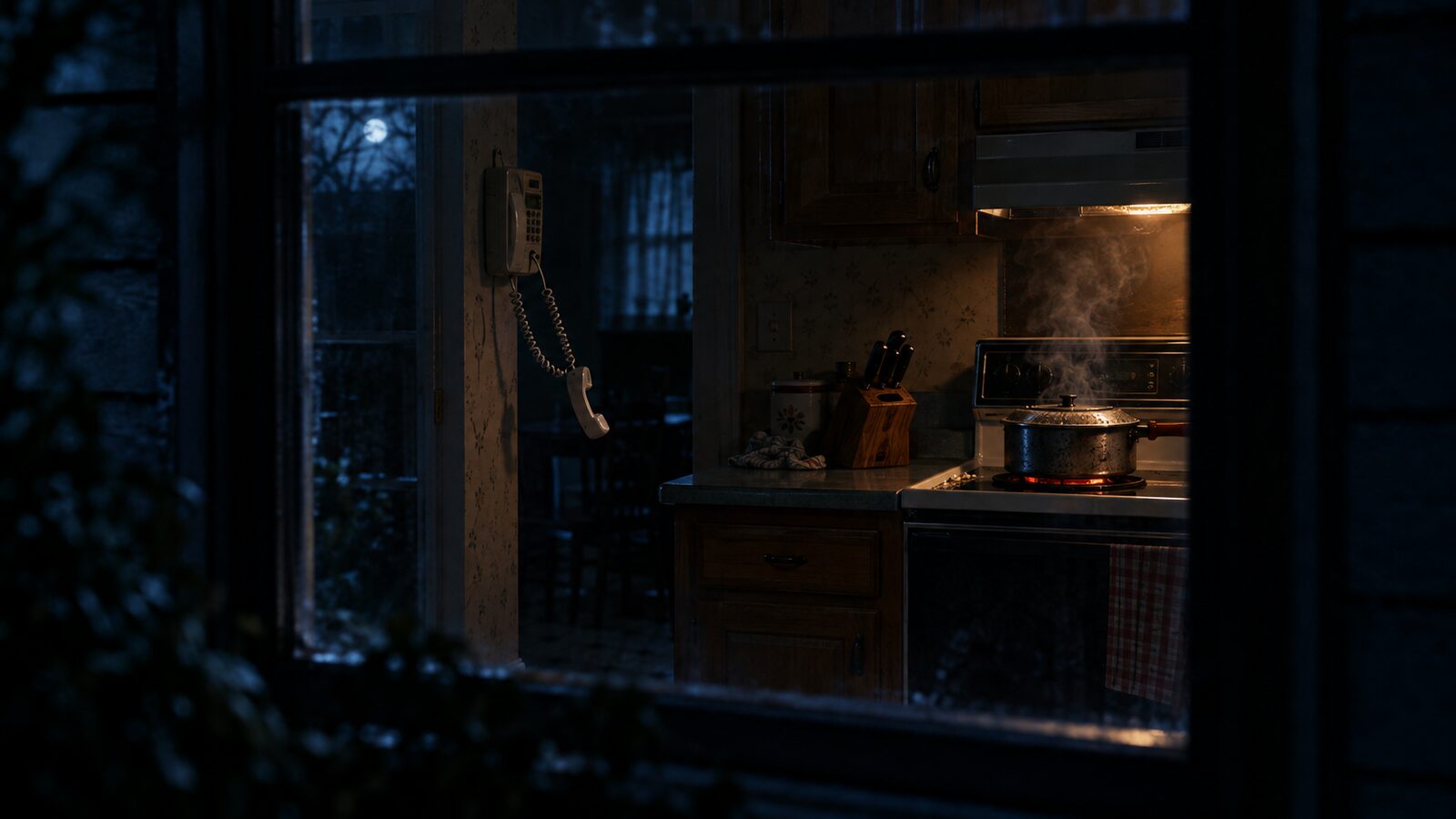
A phone rings in an empty house. A girl answers. A friendly voice asks what her favorite scary movie is. Twelve minutes later the most famous actor in the cast is dead, and an entire generation of horror fans has a new set of rules.
Scream opened on December 20, 1996, to $6.4 million and a fourth-place finish. Then it did something horror films almost never do. It grew, weekend after weekend, all the way to $173 million worldwide (Wikipedia). Thirty years and six sequels later, the newest one, Scream 7, is the biggest of them all (Wikipedia).
The slasher was supposed to be dead in 1996. This is how a struggling writer, a reluctant director and a $15 million movie brought it back, and why Ghostface is still answering the phone.
The first two chapters, free to read
A house-sit in 1994
In 1994 Kevin Williamson was a struggling screenwriter with no produced credits, house-sitting for a friend. One night he watched a Turning Point special about Danny Rolling, the serial killer who had preyed on college students in Gainesville, Florida. It rattled him. Later that night he noticed an open window, picked up a knife and phoned a friend to talk himself down. The two ended up quizzing each other about Freddy Krueger and Jason Voorhees (Wikipedia, Wikipedia).
That phone call is the seed of the most famous opening in modern horror. Williamson also had an older idea to draw on: a one-act play he wrote in college about an unknown caller tormenting a young woman (Wikipedia).
He wrote the script in three days, with John Carpenter's Halloween score playing while he typed, and he drafted two five-page outlines for sequels at the same time. He called it Scary Movie. His agent told him to tone down the gore. Williamson refused to cut the dialogue, because the talk was the point. His characters had seen every slasher film and knew the rules, which meant the killer could use those rules against them (Wikipedia).
A Friday with no bids, a Monday with a war
The script went out on a Friday in June 1995 and drew nothing. By Monday it was the center of a bidding war that included Paramount, Universal and Morgan Creek (The Cinematic Reel), with Oliver Stone's company also in the hunt (Deep Focus Review).
Producer Cathy Konrad of Woods Entertainment brought it to Richard Potter at Dimension Films, the young horror label Bob Weinstein ran inside Miramax. Williamson took Dimension's offer, reported at $400,000 to $500,000, even though rival bids were said to be higher, because Dimension wanted to start shooting right away (Wikipedia). He also knew a horror label would not try to sand down the violence (Smithsonian).
The deal shaped the script. Weinstein felt too much time passed between the opening murder and the next death, so Williamson added the killing of Principal Himbry (Wikipedia).
The director who said no twice
Wes Craven had made A Nightmare on Elm Street and did not want to go back. He was trying to move toward less graphic, more mainstream work, and he was eyeing an adaptation of The Haunting of Hill House. He turned Scream down twice (Yahoo, Wikipedia)....
Members only
Keep reading the full Dossier
Night Shift members get the whole story: ten chapters, every number sourced, the full franchise table and an anniversary watch list. A new Dossier every month, plus early access to new spotlights. Cancel anytime.
Already a member? Sign in
Collector's Circle
Collector's file: what to own from Woodsboro
How to spot a 1990s Fun World mask, the crew items that still carry the Scary Movie title, original one-sheets and what to watch for at the 30th anniversary.